03 Aug 2026
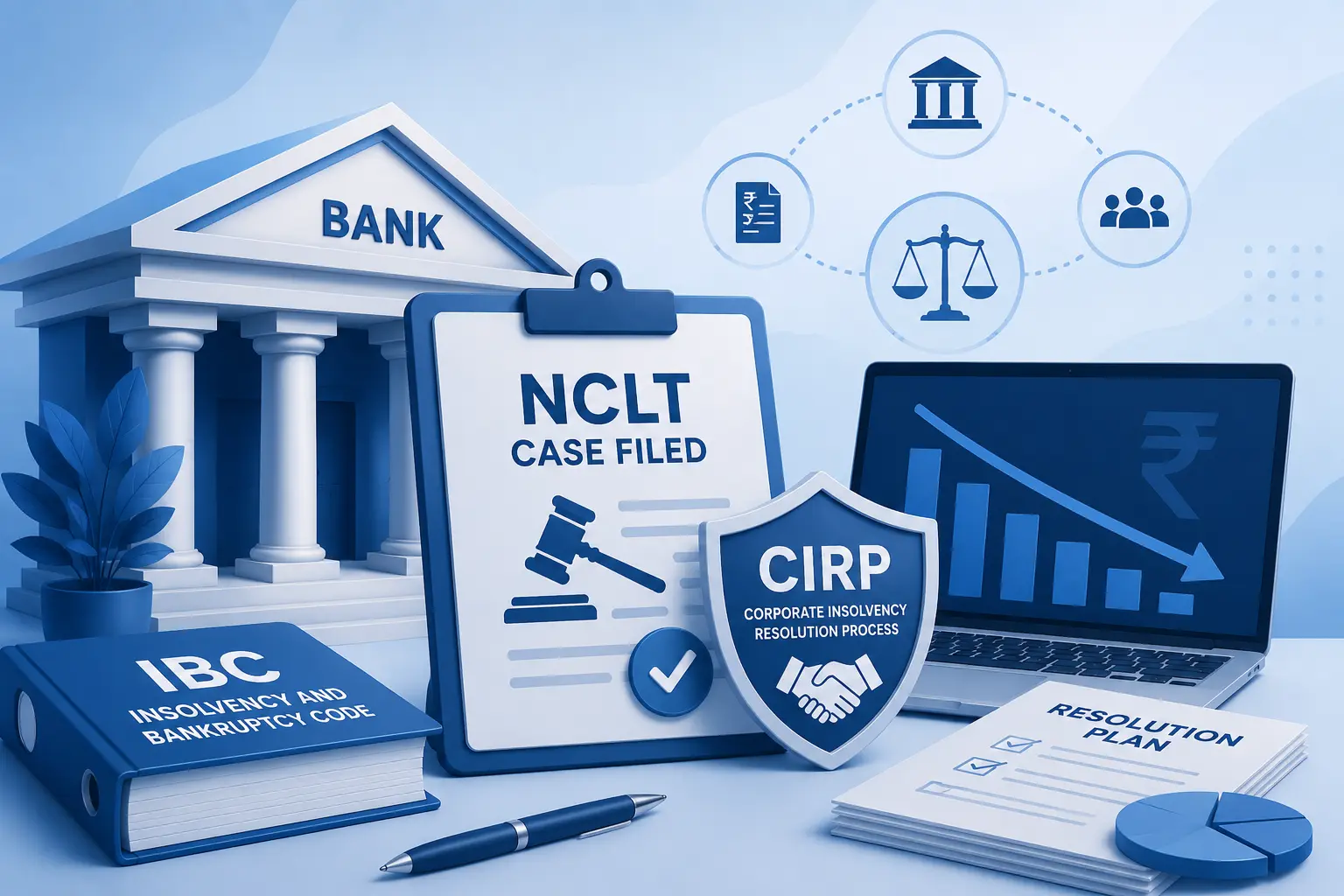
There's a moment every promoter remembers. Not the day the loan slipped into NPA. Not the first recovery notice. The moment that really lands is when someone calls to say your bank has filed under Section 7 of the IBC.
That's when CIRP (IBC) stops being something that happens to other companies.
Most borrowers still believe they have time to negotiate. A few calls to the relationship manager, maybe an OTS proposal already on the table—surely the bank won't push this through. What they don't grasp is that from the moment the NCLT admits the petition, the game has already changed. Your board is suspended. Control passes to an interim resolution professional. Whatever leverage you had in the negotiation walked out the door.
We've seen this play out too many times. The corporate insolvency resolution process isn't complicated—but it is ruthless about timing.
The ₹1 Crore Threshold Nobody Takes Seriously Until It's Too Late
Here's the part that still surprises CFOs who should know better: the IBC process kicks in at a default of just ₹1 crore. Not ₹50 crore. Not ₹100 crore. A working capital facility in default, an unpaid vendor bill above that threshold—any of these can land a company in front of the NCLT.
The NCLT has 14 days to admit or reject the petition. If debt and default are established — and in most cases they are — admission follows. The moratorium under Section 14 kicks in immediately. No new recovery suits, no asset transfers, no enforcement actions. The business is frozen in place while the resolution process runs.
The statutory timeline is 180 days, extendable to 270 days with 66% CoC approval, with an outer limit of 330 days. In practice, ICRA data from March 2026 puts average resolution timelines at 744 days — more than double the original intent. Close to 78% of ongoing CIRP cases have already crossed the 270-day mark. For a running business, that's years of suspended decision-making and management bandwidth consumed entirely by insolvency proceedings.
What the Resolution Professional Does — and Doesn't Do — for You
This is where most borrowers have the wrong mental model. The resolution professional is not your advisor. They manage the corporate debtor in the interest of the creditor collective—the Committee of Creditors. Their job is to keep the business operational while resolution plans come in, not to protect your equity or your legacy in the company.
Once the CoC is constituted within 30 days of NCLT admission, the resolution professional invites resolution plans from third-party applicants. Existing promoters can submit plans too, subject to Section 29A eligibility. But you're now competing openly for your own company.
A resolution plan needs 66% CoC vote approval, then NCLT sanction. If no viable plan emerges within the permitted timeline, the NCLT orders liquidation. Recovery in liquidation cases currently averages around 4% of admitted claims. That number alone should change how any CFO thinks about letting things reach that stage.
There Is an Exit. But the Window Is Narrow.
Section 12A of the IBC allows CIRP withdrawal after NCLT admission—but requires 90% CoC approval plus NCLT sanction. That's a high bar. Getting 90% of creditors aligned means your settlement offer must be credible, adequately funded, and professionally presented.
This is exactly where distressed account funding becomes relevant. Not as a last-ditch rescue, but as the financial backbone that makes a Section 12A exit viable. Without committed capital behind your offer, that CoC vote rarely moves.
Before any of this, the better path is a negotiated resolution with lenders before the petition is even filed. The RBI's Prudential Framework for Resolution of Stressed Assets provides a workable pre-insolvency restructuring route. IBBI's own data confirms it—over 30,000 cases were settled before NCLT admission between 2016 and December 2024, covering defaults of ₹13.78 lakh crore. Those borrowers came early, with a plan, backed by stressed account funding structures that gave their proposals real credibility.
That's the real lesson. The IBC process is not your enemy. Waiting until it begins.
At Credit Curators, our CIRP advisory work starts long before a petition is filed. If your account is already under stress, let's have a direct conversation about your real options—before someone else forces the timeline. Follow our insights on LinkedIn.
Frequently Asked Questions
What triggers a CIRP under IBC—and can it happen to an MSME?
Any payment default above ₹1 crore can trigger the corporate insolvency resolution process. A financial creditor, operational creditor, or even the company itself can file before the NCLT. MSMEs are fully covered under the IBC process, though a faster pre-packaged insolvency resolution process exists specifically for smaller entities.
Once CIRP starts at NCLT, does the promoter lose all control?
Yes, immediately. The board is suspended the day the NCLT admits the petition. An Interim Resolution Professional takes over. Promoters can still submit resolution plans if eligible under Section 29A—but they're no longer running the company.
Who is the resolution professional, and whose interests do they represent?
The resolution professional is an IBBI-registered insolvency professional managing the corporate debtor under CoC oversight during CIRP. They're not in the borrower's corner—they run the resolution plan process transparently in the interest of all creditors collectively.
Can CIRP be stopped after NCLT has already admitted the case?
Yes, under Section 12A—with 90% CoC approval and NCLT sanction. Where a promoter can back a credible, funded settlement offer, it's achievable. Without that capital commitment, getting creditors to 90% agreement is extremely difficult.
What happens if no resolution plan gets approved within the IBC timeline?
Liquidation. Recovery in liquidation averages around 4% of admitted claims currently, versus roughly 32% in successful resolution plans. This gap is precisely why early CIRP advisory engagement and pre-admission settlements matter so much to outcomes.
Is there a faster alternative to CIRP for distressed MSME borrowers?
The Pre-Packaged Insolvency Resolution Process was designed for MSMEs—it runs in 120 days and keeps the promoter involved. Uptake has been limited, with only 18 cases admitted by March 2026. Most MSME borrowers still find negotiated pre-admission settlements, backed by structured funding, a faster and less disruptive path out of insolvency stress.
Credit Curators is a Gurugram-based distressed debt and special situation advisory firm working with MSME owners, corporate borrowers, ARCs, and investors across India.
 Credit Curators